


Self-drive Japan: A Singapore resident’s guide to road trips with amaze
This article covers:
- Key takeaways
- What Singapore drivers need before a Japan road trip
- Japan road rules Singapore drivers should know
- Best self-drive routes across rural Japan
- How Japan’s driving culture keeps road trips stress-free
- Save on every stop with one travel card
- Plan your Japan self-drive trip from Singapore
- Frequently Asked Questions
Cruising down Japan’s scenic highways is one of the best ways to experience the country. It’s no surprise that Singaporean travellers enjoy self-driving in Japan with its well-maintained roads, left-hand traffic, and courteous driving culture.
Once you venture outside the major cities, Japan unfolds its rolling hills, mountain lakes, quaint villages, and some of the cleanest highways you’ll ever drive on. It’s one of the few destinations where the drive itself becomes the holiday! And when you’re constantly making payments through the trip – from fuel stops to parking and convenience stores – keeping the FX costs low can make a significant difference.
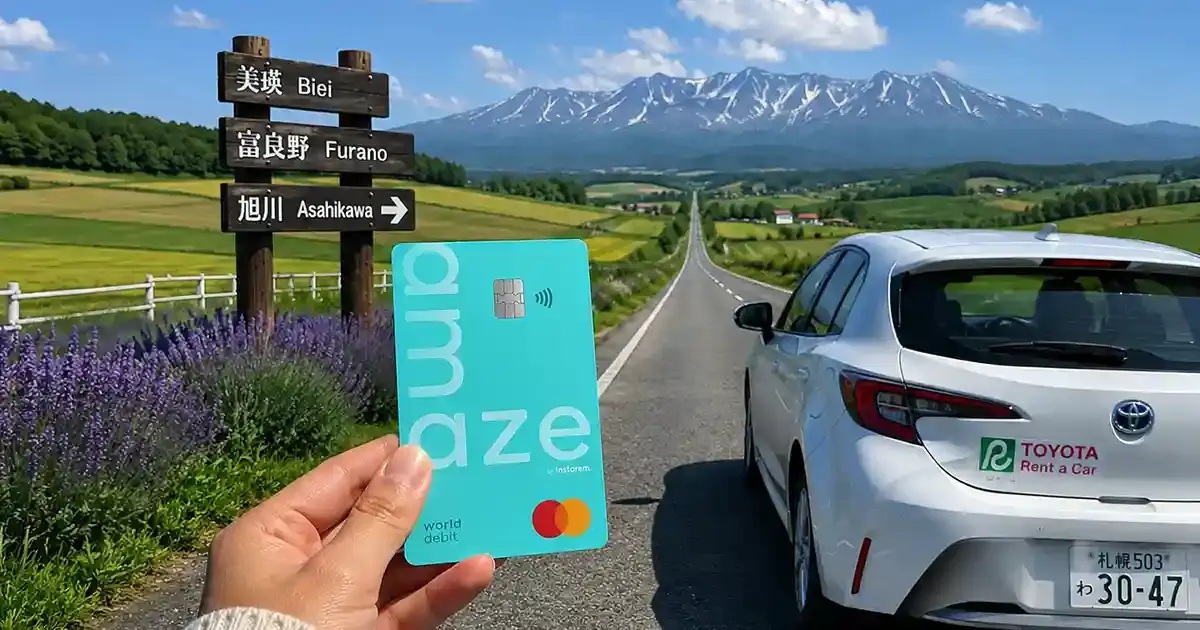
The Instarem amaze card lets Singaporean travellers pay directly in JPY across Japan with no foreign transaction fees on wallet-funded spend, while earning 0.5 InstaPoints per dollar spent. These InstaPoints can be converted to KrisFlyer miles.
From Hokkaido’s scenic countryside roads to Tokyo convenience store stops, amaze helps you pay seamlessly with competitive FX rates and no added markup.
Key takeaways
- Singaporeans need an International Driving Permit (IDP) from the Automobile Association of Singapore before self-driving in Japan – a Singapore licence alone is not valid. Don’t forget to carry the physical copy of the driving permit.
- As of May 2026, S$1 buys approximately ¥124, giving Singapore travellers roughly 10% more purchasing power in Japan than two years ago.
- The Instarem amaze card eliminates foreign transaction fees on wallet-funded JPY payments and earns 0.5 InstaPoints per S$1, convertible to KrisFlyer miles.
- Japan drives on the left (same as Singapore), roads are well-maintained, and Toyota Rent a Car offers English navigation and ETC cards for toll roads.
- The amaze card works at petrol stations, parking, convenience stores, Suica top-ups, and ATMs (up to S$1,000/day withdrawal) — covering virtually every road trip expense.
What Singapore drivers need before a Japan road trip
Self-driving through Japan can feel intimidating initially, especially if you’ve never driven overseas before. But with a little preparation, it becomes one of the smoothest travel experiences possible.
The first thing Singapore residents need is an International Driving Permit (IDP). Your Singapore driving licence alone is not sufficient in Japan. You can apply for an IDP through the Automobile Association of Singapore, and it’s valid for one year.
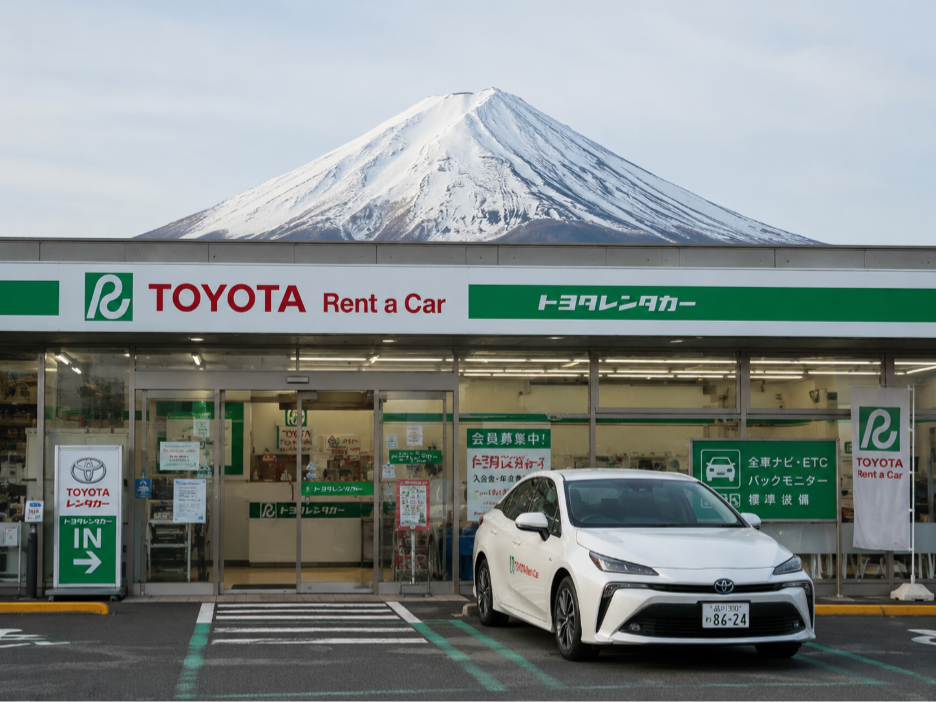
When it comes to rental cars, Toyota Rent a Car is one of the safest and most reliable choices for travellers.
A few important things to select while booking:
- Ensure you select English Navigation
- Add the ETC card option for expressways and toll roads
- Add JAF roadside assistance coverage for extra peace of mind
Toyota Rent a Car bookings are often charged in either USD or JPY depending on the booking flow and payment setup. Paying for a Toyota Rent a Car booking with the amaze card avoids the 2.5–3.5% overseas transaction fee that most Singapore bank cards charge on foreign-currency online payments, because amaze applies Instarem’s FX rate with no additional markup on wallet-funded transactions.
And because amaze works well across both online bookings and physical overseas spending, it essentially becomes one card that can manage almost your entire Japan trip.
Having English navigation makes the entire experience far less stressful, especially outside major cities.
💡 Get your free amaze card before your trip — set up takes under 5 minutes in the Instarem app. Download the app →
Japan road rules Singapore drivers should know
Japan’s road network is incredibly organised, but there are a few things Singapore drivers should understand before starting.
One thing you’ll notice quickly is how orderly and disciplined the driving culture feels. Drivers are patient and predictable, which makes driving more convenient once you settle in.
However, there are some traffic flow differences. Yielding rules and right turns work differently compared to Singapore, especially at intersections. Drivers are expected to be patient and highly aware of pedestrians and oncoming traffic.
One thing that helps significantly before your trip is familiarising yourself with some of Japan’s common road signs and parking restrictions. While most highways and major roads include English guidance, many local traffic signs, parking notices, and directional indicators still appear primarily in Japanese.
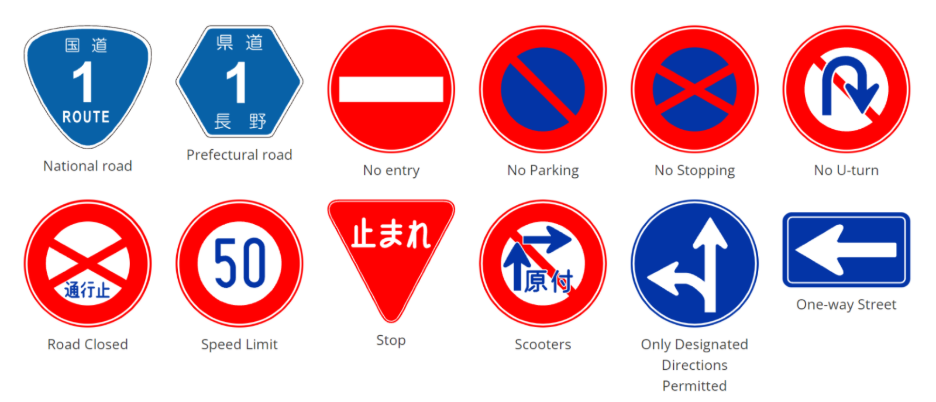
A quick understanding of the basics — especially no-entry signs, parking restrictions, one-way roads, and stop signs — makes driving much more comfortable once you’re outside the major cities. Fortunately, most signs are highly visual and fairly intuitive after a day or two on the road.
There are also useful guides for overseas travellers: Japan Traffic Rules Guide and Important Japanese Road Signs. These are worth reading before your trip, especially if it’s your first time driving in Japan.
Parking in Japan
Parking in Japan deserves its own section because it’s very different from Singapore. Most parking areas are extremely organised, but many use automated systems or machine-based payment methods. Some urban parking structures even use mechanical lift systems where your car gets stored automatically.
The first time I encountered one, I was completely confused. But what stood out was how polite and patient the staff were. The attendant noticed I was struggling, walked over calmly, and guided me through the entire process without making it stressful at all.
That’s generally what Japan feels like as a driver. People are helpful, respectful, and very understanding toward tourists trying to figure things out.
Cash vs Card at parking and fuel stops
Many parking places still prefer cash, though international cards are widely accepted in larger cities. Cards like the amaze card work extremely well across parking systems, petrol stations, convenience stores, and shopping areas.
Rural Japan — especially small-town parking lots, roadside stalls, and local onsens — still runs heavily on cash. The amaze card lets Singapore travellers withdraw up to S$1,000 per day in JPY from any Mastercard-compatible ATM, removing the need to carry large amounts of pre-exchanged currency.
The combination of card usage plus easy ATM access gives travellers flexibility without overthinking currency exchange before departure.
Best self-drive routes across rural Japan
This is where a Japan road trip becomes magical. Once you move beyond Tokyo, Osaka, and Kyoto city centres, the country transforms into one of the most scenic road trip destinations in the world.
Some of the best drives include:
- Fuji Five Lakes region
- Hokkaido countryside roads
- Coastal drives in Kyushu
- Mountain routes through the Japanese Alps
- Countryside roads between Takayama and Kyoto
The freedom of having your own car changes the trip completely. You stop wherever you want. You discover random cafés. You pull over at scenic viewpoints. You spend time in places trains would never take you.
And because Japan’s roads are so clean, safe, and peaceful, the drive itself becomes relaxing instead of exhausting. Even simple roadside rest stops in Japan feel premium.
Mixing driving with public transport
Because most days involve multiple small purchases – fuel stops, cafés, parking payments, convenience stores – having the amaze card throughout the trip makes spending feel seamless without worrying about carrying excessive cash everywhere.
During city segments of the trip, Singapore travellers can use the amaze card to top up a Suica transport card at any compatible station terminal, earning 0.5 InstaPoints per S$1 on wallet-funded top-ups — the same reward rate as overseas purchases.
That flexibility matters a lot in Japan because most travellers end up mixing both experiences — driving through the countryside while still using trains and metro systems inside larger cities.
How Japan’s driving culture keeps road trips stress-free
One of the best things about driving in Japan is how respectful the driving culture is. People follow lane discipline properly. Drivers stop for pedestrians. Nobody aggressively honks. Cars merge patiently. Even in busy areas, the environment feels calm.
For Singapore residents, this makes adapting surprisingly easy.
That said, Japan is also very strict about traffic rules: speed limits are enforced, illegal parking fines are serious, and drinking and driving laws are extremely strict. So it’s important to drive carefully and defensively.
Why one card covers every road trip expense
Another thing travellers underestimate is how many small payments happen during a Japan road trip — petrol, parking, convenience stores, vending machines, hotels, attractions, train card top-ups, and last-minute shopping.
Singapore bank cards typically charge 2.5–3.5% in foreign transaction fees and FX markups on overseas spend. The amaze card eliminates foreign transaction fees on wallet-funded purchases and applies Instarem’s mid-market FX rate, which can reduce the cost of every JPY payment by up to 2–3% compared to a standard bank debit card.
| Expense Type | amaze Coverage |
| Petrol stations | Tap-and-pay at major chains |
| Parking | Accepted at automated payment machines in cities |
| Convenience stores | Accepted at 7-Eleven, Lawson, FamilyMart |
| Hotels | Online and in-person payments |
| Suica top-ups | At compatible station terminals |
| ATM withdrawals | Up to S$1,000/day at Mastercard ATMs |
| Shopping | Accepted at all Mastercard merchants |
As of May 2026, S$1 buys approximately ¥124, up from around ¥113 in mid-2024 — meaning Singapore travellers get roughly 10% more purchasing power in Japan compared to two years ago, and reducing FX conversion costs with amaze amplifies that advantage across every transaction.
Save on every stop with one travel card
The best Japan road trips are usually the ones where you leave room for spontaneity. Don’t over-plan every stop. Some of the best experiences happen when you randomly pull into a roadside café, discover a hidden lake, or stop at a Lawson with an unbelievable Mount Fuji view.
Japan is also one of the easiest countries to travel comfortably by car because everything feels thoughtfully designed – clean highways, excellent signage, reliable convenience stores, well-maintained rest stops, and safe driving conditions.
Using the amaze card throughout the trip also makes managing payments much simpler. Check the latest amaze card promotions before you travel – seasonal deals on overseas spend or bonus InstaPoints can add even more value to a Japan trip.
📊 See how much you could save on your Japan trip – check live SGD to JPY rates on Instarem →
Plan your Japan self-drive trip from Singapore
Self-driving through Japan is one of the best travel experiences Singapore residents can have.
The roads are beautiful. The people are courteous. The driving culture feels safe and respectful. And the freedom to explore at your own pace completely changes how you experience the country.
With the right preparation – an IDP from the Automobile Association of Singapore, a reliable rental from Toyota Rent a Car with English navigation and an ETC card, and the amaze card handling payments from stores to Suica top-ups – driving through Japan becomes far less intimidating than most people expect.
For more tips on making the most of your time in Japan, read our Japan travel tips guide covering what’s worth planning and what to skip.
Many travellers who self-drive in Japan once end up wanting to do it again. The freedom of the countryside – stopping at roadside cafés, discovering hidden onsens, and pulling over at scenic viewpoints – makes a train-only itinerary feel incomplete by comparison. With the amaze card handling payments across fuel, parking, and Suica top-ups, spending during the road trip becomes as seamless as the drive itself.
🚀 Ready to drive Japan? Download the Instarem app, get your free amaze card, and top up your wallet before you go. No annual fees. No foreign transaction fees on wallet spend. Get amaze now →
Frequently Asked Questions
Do Singapore residents need a special licence to drive in Japan?
Yes. Singapore residents must obtain an International Driving Permit (IDP) before driving in Japan. A Singapore driving licence alone is not valid for driving in Japan. The IDP can be applied for through the Automobile Association of Singapore and is valid for one year from the date of issue.
How much cash should I carry on a Japan road trip?
Rural Japan — including small-town parking lots, roadside stalls, and local onsens — still runs partly on cash. However, the amaze card allows Singapore travellers to withdraw up to S$1,000 in JPY per day from any Mastercard-compatible ATM, so carrying a large amount of pre-exchanged currency is unnecessary. A small cash buffer of ¥10,000–¥20,000 is typically enough for most days.
Is it cheaper to pay in JPY or SGD when using amaze in Japan?
Always choose to pay in JPY (the local currency). Choosing SGD at a Japanese terminal triggers Dynamic Currency Conversion (DCC), which applies the merchant’s own exchange rate — typically 3–5% worse than the rate Instarem offers. Paying in JPY ensures the amaze card applies Instarem’s FX rate directly.
Can I earn InstaPoints on amaze spending in Japan?
Yes, but only on wallet-funded transactions. Since March 2025, amaze wallet-funded spend earns 0.5 InstaPoints per S$1, with a minimum transaction of S$10 to qualify. Linked-card transactions no longer earn InstaPoints. These InstaPoints can be converted to KrisFlyer miles at a rate of 1,200 InstaPoints = 400 miles.